
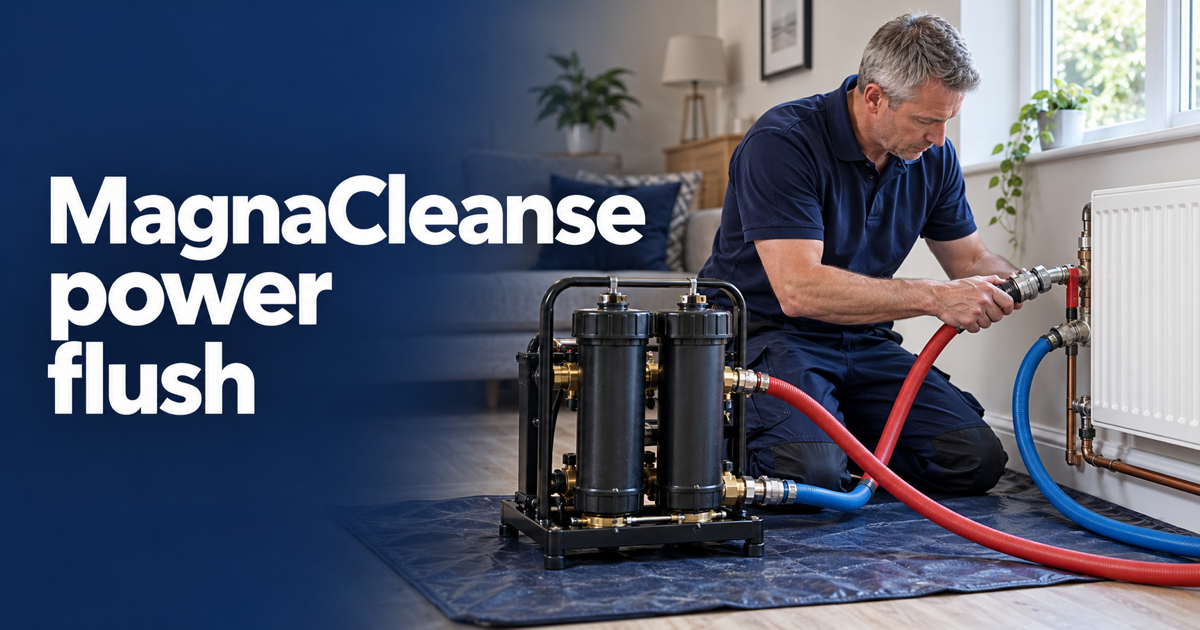
Inside almost every central heating system, water slowly reacts with steel radiators and pipework to form black iron oxide sludge, often called magnetite. Left alone, it settles in radiators, clogs valves and wears out boiler components. We clean heating systems across Barnet, Enfield, Haringey, Camden, Islington, Hackney, Waltham Forest, Bromley, Ealing, Redbridge and Harrow using Adey's MagnaCleanse process, and we often recommend it alongside a new boiler or after repeated breakdowns.
What MagnaCleanse is
MagnaCleanse is a system cleaning process developed by Adey, the company behind the MagnaClean magnetic filter. Rather than forcing water through your system at high velocity, it uses magnets to capture debris while water circulates through your heating system.
How the clean works
The engineer connects the MagnaCleanse unit to your heating system and adds a cleaning chemical to the system water, which helps loosen and lift sludge. The water is circulated and warmed by your boiler while it passes through a chamber containing powerful magnets, which pull out magnetite as it flows past. Each radiator is then worked in turn, using a handheld agitator to vibrate it and dislodge stubborn deposits so they can be captured. Clear hoses let us see when the water is running clean.
At the end, the system is drained, refilled with fresh water and dosed with an inhibitor to help slow future corrosion. A permanent magnetic filter is usually fitted to keep catching debris afterwards. You can read the manufacturer's own explanation on Adey's MagnaCleanse page.
How it differs from a traditional power flush
A traditional power flush pumps water through the system at high speed and relies on force to push sludge out, continually dumping water as it goes. That can be effective, but it is a heavy-duty approach that is not always suitable for older or fragile pipework. MagnaCleanse is a gentler, more controlled method that captures debris magnetically rather than relying on force alone, and it usually takes less time. For heavily blocked systems we will advise honestly on the right approach.
Signs of a dirty heating system
Sludge builds up gradually, so the symptoms creep up on you. Common signs include:
- radiators that are cold at the bottom but warm at the top;
- some radiators taking far longer to heat than others;
- black or dark brown water when you bleed a radiator;
- a noisy boiler, with banging, gurgling or kettling sounds;
- frequent breakdowns, pump failures or blocked heat exchangers;
- pinhole leaks in older radiators.
Cold spots at the top of a radiator usually mean trapped air rather than sludge, so we always check what is actually going on before recommending a clean.
Benefits of a system clean
A clean heating system simply works the way it was designed to. Typical benefits include:
- More even heat – radiators can warm up fully once deposits are cleared.
- Less strain on the boiler – clean water flows freely, so the pump and heat exchanger are not fighting against debris.
- Fewer breakdowns – sludge is a common cause of failed pumps, diverter valves and blocked heat exchangers.
- Protecting a new boiler – manufacturers expect the system to be cleaned before a new boiler is connected, and it can be a condition of the guarantee.
- Quieter running – removing debris can reduce the noises caused by restricted flow.
We will not promise a specific saving on your bills, because every home is different. What we can say is that a clean system gives your boiler the best chance of running efficiently. Our page on boiler efficiency and what affects it explains why.
Magnetic filters
A magnetic system filter is a compact unit fitted on the return pipe near your boiler. As water passes through, a strong magnet catches magnetite and other debris before it reaches the boiler. It does not stop sludge forming, but it captures it continuously so it does not build up again.
We usually recommend fitting a filter with a new boiler installation, and we recommend one after any system clean. The filter is emptied and cleaned during your yearly boiler service, which takes just a few minutes and shows you exactly how much debris it has caught.
Enquire about system cleaning
If your radiators are patchy or your boiler is noisy, call us on 07709 247215, Monday to Saturday from 8am to 8pm, or send us a message via our contact form. We will ask a few questions about your system and arrange a visit to confirm whether a MagnaCleanse is the right fix.